 Firmament
Don’t Let Your Agents Hold You Hostage
Teaching an agent is useful work. Having to teach it the same thing every day is exhausting.
You have six agent conversations open, and they all need something from you. You switch between tabs, check another draft, and explain what went wrong. There is pressure to finish faster, but every answer gives you more work to do.
By the end of the day, you are exhausted. It is hard to say what you actually got done.
Keeping agents moving becomes your job
I think this is an easy trap to fall into with agents. You start feeling like the blocker because they are all waiting for you. Soon, keeping them moving takes up the time you needed to decide whether they are doing the right work.
In “Don’t be a meat proxy,” Niklas Gruhn warns against passing along AI output without understanding or checking it. He asks people to add their own judgment. I agree. But even when you take that care, working with agents can leave you stuck in a loop of small corrections.
Teaching it once should count
When an agent misses the essentials, it may not know enough to do the task. It needs the rules, the relevant facts, and the reasons behind your choices. Taking time to explain those things is useful. The drain comes when you have to explain them again on the next task.
That is the part I want to change with Firmament. Its context layer keeps useful guidance available for future work. Agents can use it, build on it, and save what they learn. The time you spend explaining a task can help with the next one too.
Review gates help with the correction loop. They check drafts against your standards and give the agent feedback it can act on, before it asks for your attention.
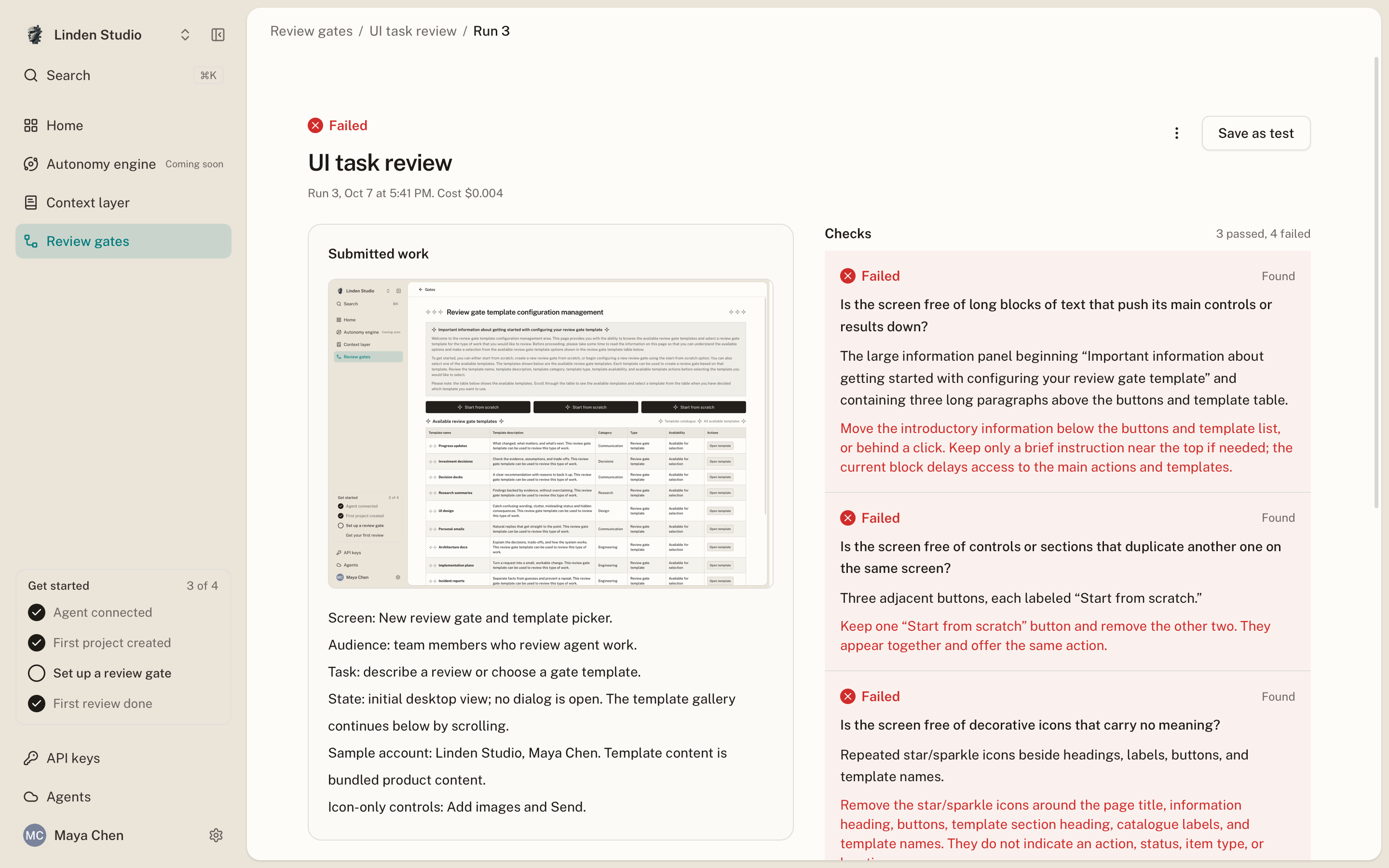
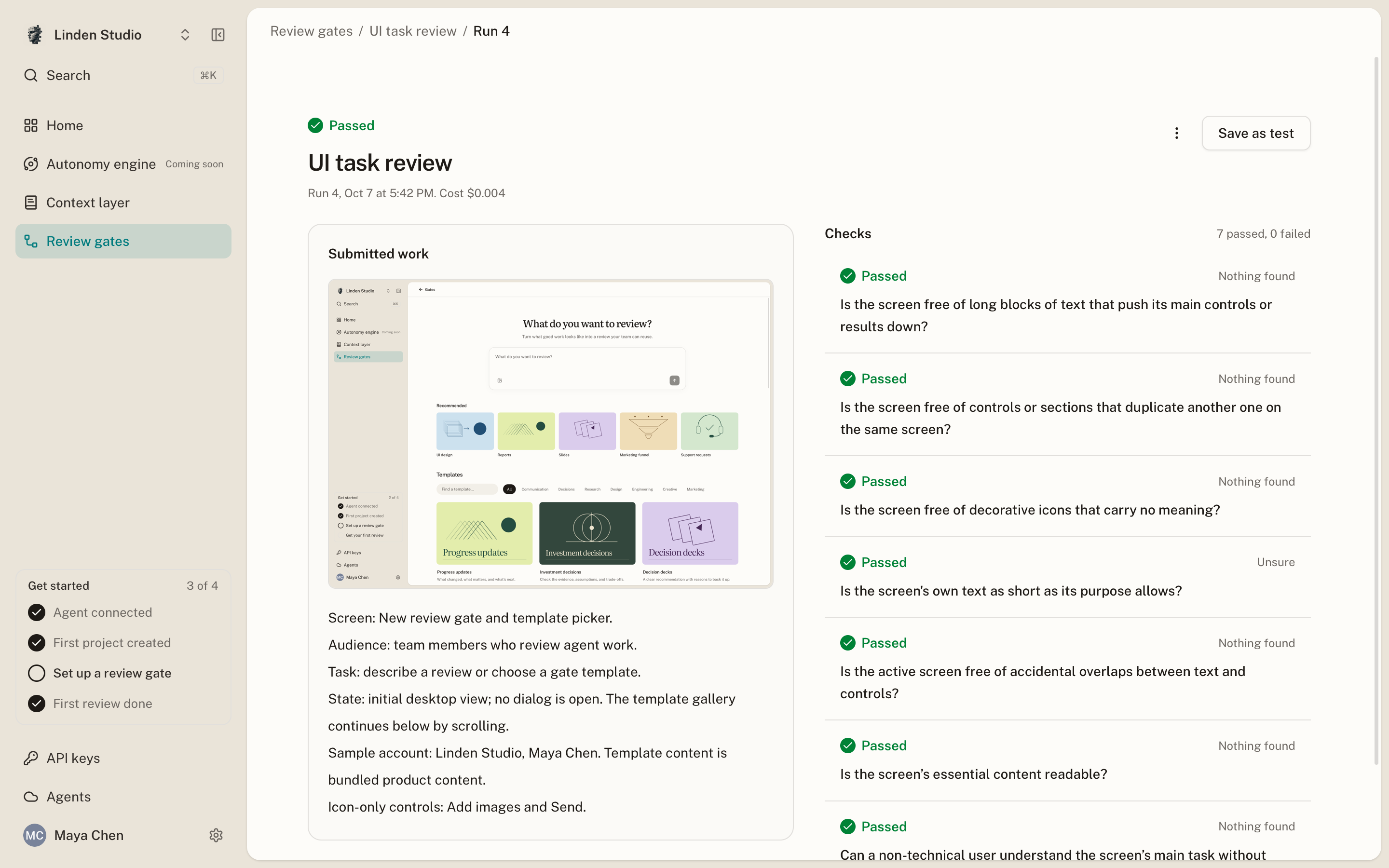
Controlled example using real reviews of the same draft gate.
You still need to guide the work and check important decisions. Your judgment matters most when choosing what to do, what to leave alone, and what good work requires. Those choices deserve more of your day than repeating a correction the agent has already heard.